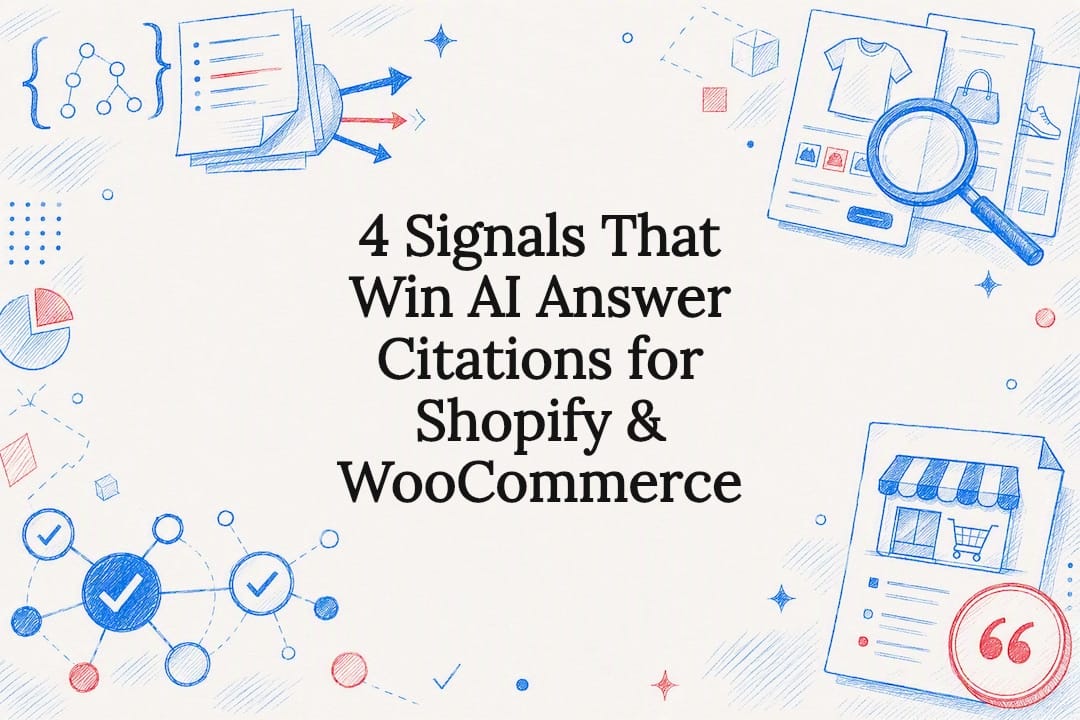
Four signals decide whether ChatGPT, Gemini, Perplexity, or Claude cite your product page: complete Product and Offer schema paired with an accurate feed, an answer-first opening paragraph, recent reviews, and confirmed price and availability. Your first move is a feed, schema, and crawl-access audit that flags anything blocking machine-readable price, availability, or product identifiers. Fix those first. Expect crawlers to pick up changes within 2 to 4 weeks, with citation gains stabilizing over 30 to 90 days.
TL;DR:
- Complete and accurate product schema, including prices, availability, reviews, and recent updates, significantly increases the likelihood of AI citations.
- Regularly syncing merchant feeds daily and ensuring crawler access in robots.txt prevents common citation failures caused by outdated or blocked data.
- Placing answer-first summaries and FAQ schema in the first 100 words improves extractability and ranking across multiple AI shopping agents.
- Using structured data like comparison tables and review excerpts in HTML enhances machine readability and authenticity verification.
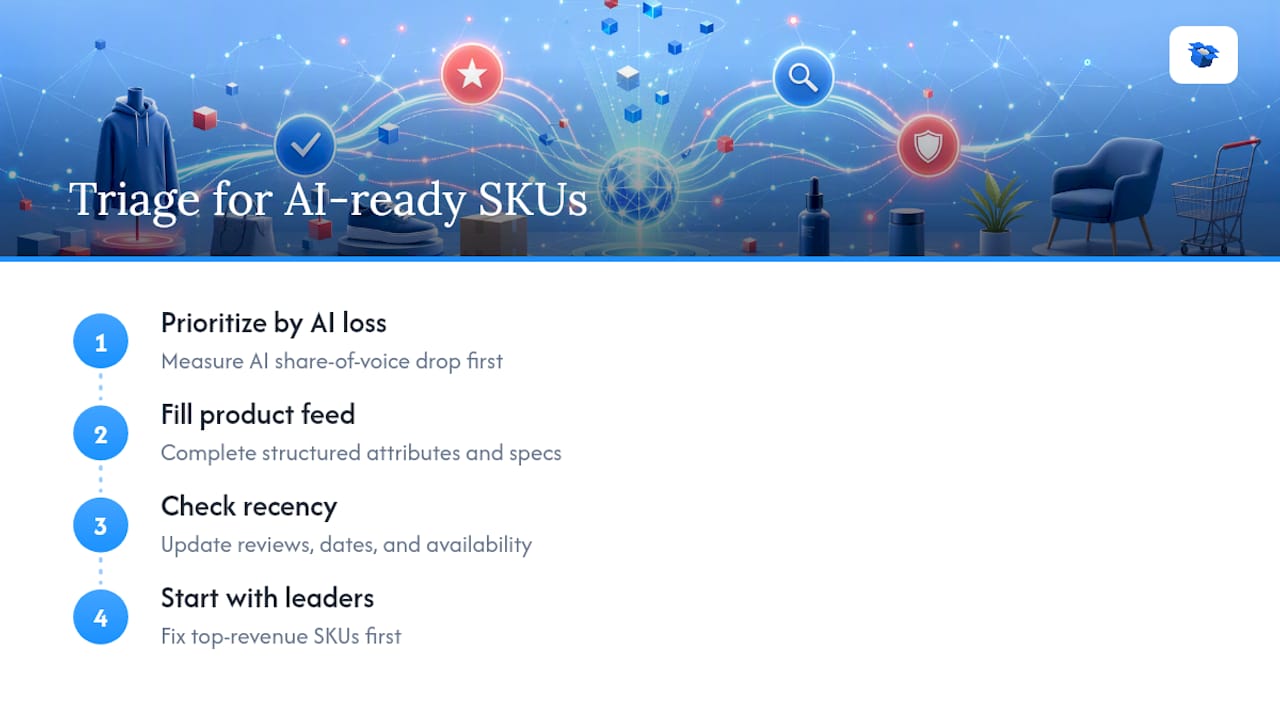
- Prioritizing products with high revenue impact and existing search visibility first can efficiently grow AI-driven traffic and citations.
 Install on Shopify
 Install on WooCommerce