ecenticecentic
How it worksResourcesPricingBlog
Install now
ASCII-art illustration of a stack of books

SKU Level Wins: Ranketta Alternatives for Shopify and WooCommerce

Published: September 4, 2026 · 19 min read

A commerce first comparison of Ranketta alternatives. See which tools provide SKU level diagnostics, Shopify and WooCommerce integration, and a free...

00

Introduction

Decorative Shopify WooCommerce comparison title card

For ecommerce teams optimizing individual product listings, ecentic is a strong Ranketta alternative because it works at the SKU level, connecting to Shopify and WooCommerce with simulation-driven diagnostics. For broader brand monitoring, Semrush, Peec AI, and Profound cover AI search analytics, agent-mention tracking, and enterprise intelligence, while Dageno AI and Otterly.ai suit teams building lighter GEO workflows.


TL;DR:

  • ecentic is the only tool designed specifically for SKU-level diagnostics, offering simulation-driven analysis and direct publishing to Shopify or WooCommerce.
  • Tools like Semrush and Yext focus on brand-level visibility and listing or media monitoring, not on analyzing individual product recommendations.
  • When evaluating vendors, insist on live data access, transparent data sources, and a short pilot period of 30 to 60 days to verify impact on product page performance.
  • Most tools’ value depends on their data update cadence; monthly refreshes may not reflect current market conditions necessary for rapid adjustments.
  • Pricing models vary from free or tiered subscriptions for SMBs to custom enterprise contracts, with scalability based on SKU volume, mentions, or data integration complexity.
01

Which Ranketta Alternatives Should Be on Your Shortlist?

Which Ranketta Alternatives Should Be on Your Shortlist?

Not every tool on this list does the same job. Some track whether your brand gets mentioned by ChatGPT or Gemini. Others go deeper and tell you why a specific product page did or didn’t get recommended, down to the SKU. Sorting the field this way saves you from demoing six platforms that all promise “AI visibility” but solve completely different problems.

Here’s the shortlist, ranked by relevance to SKU-level and brand-level AI shopping visibility work:

  • ecentic — Best for ecommerce teams needing product-page-level AI visibility. Standout: simulation-driven SKU diagnostics paired with one-click publishing to Shopify or WooCommerce. Pricing shape: a free introductory scan, then tiered subscriptions or a pay-as-you-go model tied to agent-driven order volume.
  • Semrush — Best for teams that want AI visibility folded into an existing SEO stack. Standout: its AI visibility toolkit sits alongside keyword and backlink tools teams already use. Pricing shape: tiered subscription plans scaled by feature access and seats.
  • Peec AI — Best for teams that specifically need agent-level mention tracking across ChatGPT, Perplexity, and similar assistants. Standout: granular visibility into how often and where a brand surfaces inside agent responses. Pricing shape: subscription tiers built around tracked prompts and domains.
  • Profound — Best for large enterprises that need deep analytics and custom integrations into existing data infrastructure. Standout: enterprise-grade feature depth built for teams with dedicated data or growth engineering resources. Pricing shape: enterprise contracts rather than self-serve tiers.
  • Dageno AI — Best for teams that want a single workflow connecting monitoring, strategy, and content execution rather than juggling separate tools. Standout: it links measurement directly to content production, closing the loop between “what’s wrong” and “what to publish next.” Pricing shape: workflow-based subscription tiers.
  • Otterly.ai — Best for smaller teams or anyone running a first pilot on a tight budget. Standout: simple setup and a lower-friction onboarding process compared to enterprise platforms. Pricing shape: accessible entry tiers aimed at smaller marketing teams.
  • Yext — Best for teams that care about structured brand and location data feeding answer engines. Standout: a knowledge-graph approach that keeps product and brand facts consistent across surfaces. Pricing shape: tiered plans based on the number of locations or listings managed.
  • Meltwater — Best for teams that already use it for media monitoring and want AI mention tracking bundled into that existing relationship. Standout: broad monitoring reach across media and social channels alongside newer AI visibility features. Pricing shape: enterprise-oriented contracts.

Writesonic, SE Ranking, Similarweb, Birdeye, Uberall, Alto, Centium, and LLMrefs round out the wider competitive set. G2’s alternatives page groups several of these under the same “AI competitor analysis” category Ranketta occupies, which is useful context if you’re building a longer evaluation list. Most fall into content generation (Writesonic), SEO-adjacent visibility (SE Ranking, Similarweb), or local/listings management (Birdeye, Uberall, Alto, Centium), with LLMrefs positioned closer to agent-tracking tools like Peec AI. None of them optimize at the individual product-listing level the way ecentic does, which matters if your actual bottleneck is getting specific SKUs recommended rather than tracking brand mentions in the abstract.

02

How Do These Alternatives Compare Side by Side?

How Do These Alternatives Compare Side by Side?

The table below lines up the shortlist against six dimensions that actually predict fit: who the tool is built for, what makes it different, how pricing is structured, whether it works at the SKU or brand level, what it plugs into, and how ready it is for enterprise use.

Birdeye, Meltwater, Writesonic, SE Ranking, Similarweb, Uberall, Alto, Centium, and LLMrefs each play in adjacent categories, ranging from reputation and listings management to content generation and traffic analytics, but none publish the same SKU-level, ecommerce-integration combination that anchors the top rows above.

Pro Tip: Before you sign anything, ask each vendor for their raw source list and update cadence. A platform that only refreshes its AI-mention data monthly is telling you about last month’s market, not the one you’re competing in this week. This detail rarely shows up in a sales deck, but it’s the single biggest predictor of whether the tool will still feel useful six months in.

The dimensions above matter more than any single feature checklist because they reveal what a vendor is actually optimized to do. A tool built for brand mention tracking, like Peec AI, will never give you a line-item explanation of why one product page outranked another in an agent’s response. A tool built for SKU-level diagnostics, like ecentic, generally won’t give you the sprawling social and media monitoring reach that Meltwater offers. Neither is wrong. They’re solving different halves of the same visibility problem, and a lot of buying regret in this category comes from expecting one half to cover the other.

03

How Do You Choose the Right Tool for Your Team?

How Do You Choose the Right Tool for Your Team?

Start with the job, not the vendor list. Here’s a practical sequence for narrowing the field:

  1. Define the outcome you’re actually chasing. If the goal is “get more of our SKUs recommended by ChatGPT and Gemini,” you need SKU-level diagnostics. If it’s “know when and how often our brand gets mentioned,” you need a brand-monitoring platform.
  2. Map your tech stack constraints. Confirm whether your store runs Shopify, WooCommerce, or a custom setup, since that determines which tools can even connect without custom engineering work.
  3. Build a shortlist of three, not eight. Include ecentic if product-level optimization is the priority, plus one brand-monitoring tool and one enterprise-grade option if your org needs deeper analytics later.
  4. Request a live demo, not a slide deck. Ask the vendor to run your actual product catalog or brand name through their system in real time.
  5. Run a 30-to-60-day pilot before committing annually. Track whether AI-driven visits or agent recommendations actually move, not just whether the dashboard looks convincing.

During the demo, push past the surface pitch with a handful of direct questions:

  • Where does your data come from, and how large is the sample behind each score?
  • How do you attribute a sale or visit specifically to an AI agent versus regular organic traffic?
  • What’s your update cadence, daily, weekly, or monthly?
  • Does the platform publish changes directly to Shopify or WooCommerce, or does it just generate a report someone has to act on manually?
  • Can you show a case result from a merchant in a similar category to mine?

A few answers should make you walk away. Opaque sampling (“we can’t disclose our data sources”) is a red flag, because you can’t trust a score you can’t audit. No integration path into your actual storefront is another, since insight without a publishing mechanism just becomes another dashboard nobody checks after week two. And no attribution model at all means you’ll never know if the tool is working or if sales moved for unrelated reasons.

On timeline and budget: SMB teams typically move from first demo to live pilot in two to four weeks, with entry pricing shaped around flat monthly tiers or a free scan to start. Enterprise deployments, especially those involving Profound or Meltwater, tend to run longer procurement cycles measured in months, with custom contract pricing tied to data volume and integration scope rather than a published rate card.

04

Why ecentic Leads the Field on SKU-Level Optimization

Why ecentic Leads the Field on SKU-Level Optimization

Most AI visibility tools were built to answer “is our brand showing up?” ecentic was built to answer a narrower, more useful question: “why did this specific product lose to a competitor’s listing, and what do we change?” That distinction is the whole reason it sits at the top of this list for ecommerce teams, as detailed in AI-Driven Search: Transforming Online Visibility Strategies.

The mechanics back it up. According to ecentic’s own platform documentation, the tool connects directly to Shopify and WooCommerce, then runs simulation-driven diagnostics against each product page to show exactly how ChatGPT, Gemini, Claude, and Perplexity evaluate it. That includes:

  • Plain-English win/loss breakdowns comparing your listing against competing products an agent considered.
  • Actionable rewrite suggestions targeted at the specific attributes agents weighed.
  • One-click publishing of those changes straight back into the store, which the product listings feature page describes as a way to close the loop between diagnosis and action without a developer ticket.
  • Continuous rescans that track whether agent selection rates actually improve after a change goes live.

That last point matters because AI shopping agents don’t evaluate a static web page the way a search crawler does. Technical research on how large language models generate and rank answers suggests retrieval and prompt-synthesis mechanics shape what gets surfaced, which is exactly why generic SEO signals alone tend to underperform for this specific job. Structured, SKU-level product data and simulated agent prompts give a platform something concrete to optimize against.

Teams running a hybrid stack often pair ecentic’s SKU-level diagnostics with a brand-level monitor like Peec AI or Semrush to cover both the product page and the broader brand narrative an agent might reference.

05

How Reliable Are These Tools, Based on User Reviews?

How Reliable Are These Tools, Based on User Reviews?

Review patterns across this category tell a consistent story: reviewers reward transparency and speed of setup far more than raw feature count. On aggregators like G2, tools that clearly explain their data sources and let a marketer see results within the first pilot cycle tend to score higher on reliability, even when their feature set is narrower than an enterprise competitor’s.

Semrush and Meltwater carry large review volumes thanks to years of use outside the AI visibility category, which gives buyers a longer track record to evaluate but also means a chunk of those reviews aren’t speaking to the newer AI-specific features at all. Newer, more focused platforms like Peec AI, Otterly.ai, and Dageno AI have thinner review histories simply because the category itself is young, so a smaller sample size shouldn’t automatically read as a weaker signal.

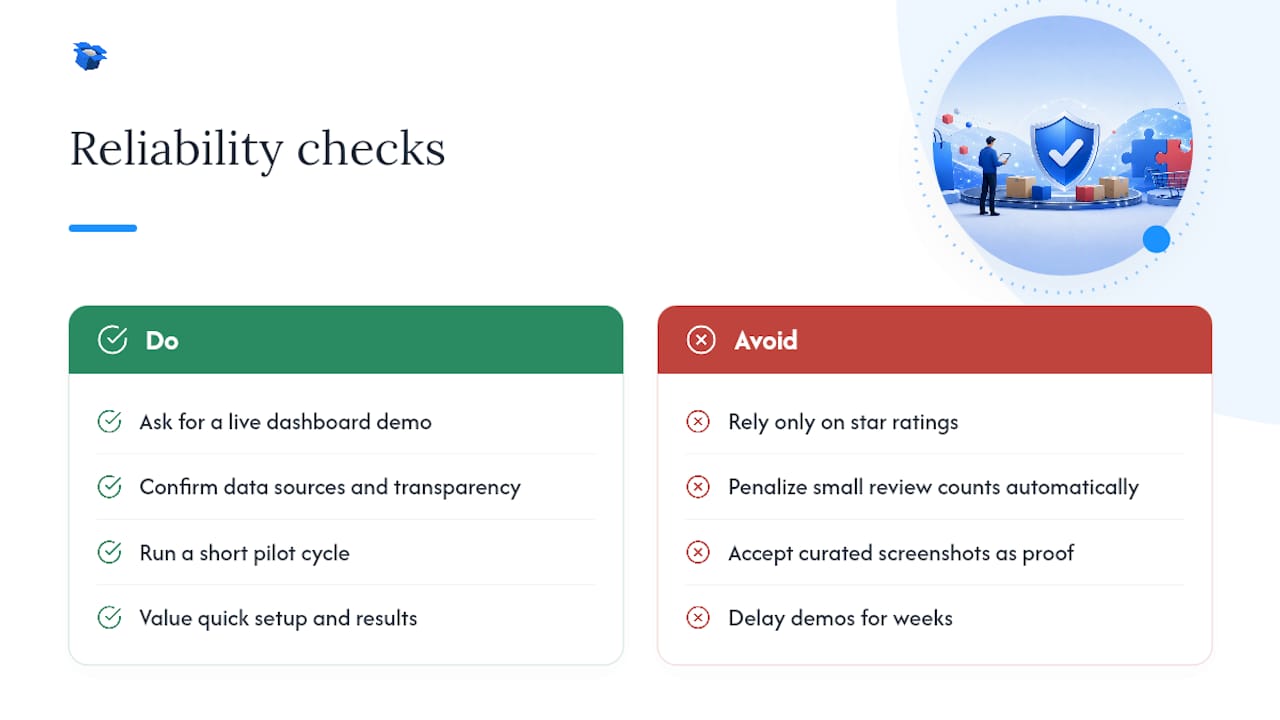
The more useful reliability check isn’t star rating at all. It’s whether a vendor can show you a live dashboard reflecting real, current data during a demo rather than a curated screenshot from a case study. A platform that hesitates to open that view up, or asks for weeks of notice before a live walkthrough, is telling you something about how confident it is in its own numbers.

How Reliable Are These Tools, Based on User Reviews? — overview diagram

06

How Do Support and Response Times Stack Up?

How Do Support and Response Times Stack Up?

Support quality tends to split along company size, not category. Enterprise-oriented platforms like Profound and Meltwater typically assign dedicated account managers and offer contractual service-level agreements, which suits large teams that need guaranteed response windows but adds negotiation overhead for smaller buyers.

Self-serve and mid-market tools, including ecentic, Otterly.ai, and Dageno AI, generally lean on faster, more direct support channels: in-app chat, documented onboarding flows, and email response times measured in hours rather than days. For a team running a pilot, that speed often matters more than a formal SLA, since the goal in the first 30 to 60 days is getting unstuck quickly, not enforcing a contract.

Ask directly during any demo who handles support after signing, whether it’s a shared inbox or a named contact, and what the average first-response time actually is. Vendors that answer this precisely, with a number, are usually more reliable in practice than ones that describe support in vague terms like “dedicated success team” without specifics.

07

What Should You Know About Security and Data Privacy?

What Should You Know About Security and Data Privacy?

Every tool on this list processes some combination of your product catalog, storefront data, or brand mentions, which raises real questions about where that data lives and who can access it. Platforms integrating directly with Shopify or WooCommerce, like ecentic, typically operate through each platform’s official app permissions model, meaning access scope is defined by the integration itself rather than a blanket data pull.

Enterprise platforms such as Profound and Meltwater generally publish more formal compliance documentation, given their larger customer base and regulatory exposure. Smaller or newer entrants may not yet have published detailed security certifications, which isn’t automatically disqualifying but is worth asking about directly rather than assuming.

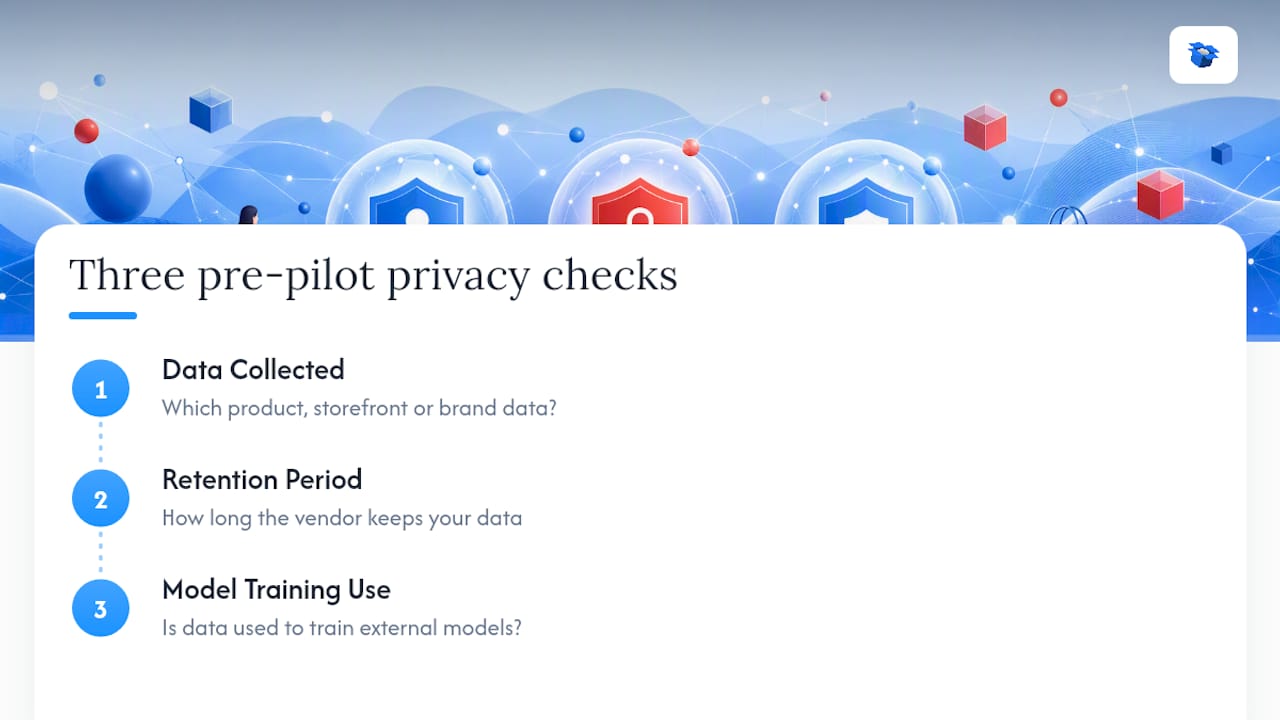
Before any pilot, confirm three things with a vendor: what specific data they pull from your store or brand channels, how long they retain it, and whether that data is used to train models beyond your own account. Teams handling customer-level data alongside product data should push harder on this last point, since attribution and analytics features sometimes require broader data access than a simple visibility scan does.

Three-part ecommerce data privacy checklist

08

Can These Tools Scale as Your Business Grows?

Can These Tools Scale as Your Business Grows?

Scalability in this category usually comes down to two things: how many SKUs or brand mentions the platform can process, and whether pricing scales predictably as you grow. ecentic’s tiered and usage-based pricing model, tied to agent-driven order volume, scales naturally with a growing catalog without forcing a renegotiation at every growth stage.

Enterprise platforms like Profound are built for scale from the start, but that scale comes bundled with enterprise contract cycles that smaller teams may find slow to navigate for a first pilot. Mid-market tools like Semrush and Yext sit in between, offering tiered plans that step up as seat count or listing volume grows, without requiring a full enterprise sales process at every tier change.

Customization tends to follow the same pattern. Platforms built for a single job, like ecentic’s SKU diagnostics or Peec AI’s mention tracking, offer less surface-level configurability but also less complexity to manage. Broader platforms like Semrush or Meltwater offer more customization because they’re doing more jobs at once, which is useful for a large team but can feel like overhead for a lean ecommerce operation trying to solve one specific problem fast.

09

A Commerce-First Take on Choosing an AI Visibility Tool

A Commerce-First Take on Choosing an AI Visibility Tool

Most of the advice floating around this category treats “AI visibility” as one problem with one type of solution. It isn’t. Brand mention tracking and SKU-level optimization solve different jobs, and the conventional shortlist approach, pick whichever tool has the most features, ignores that distinction entirely.

Here’s what the evidence actually supports: if your revenue depends on individual product pages getting recommended by shopping agents, generic brand monitoring won’t tell you why a specific SKU lost, or what to fix. That’s a diagnostic gap only SKU-level tools like ecentic are built to close, using structured product data and simulated agent prompts rather than surface-level SEO signals.

The reader’s real priority should be sequencing, not feature-hunting. Start with the tool that fixes your most measurable revenue leak, usually product-page performance, before layering on a brand-level monitor for market awareness. Buying the enterprise platform first, because it looks the most sophisticated, is how teams end up with a dashboard full of insight and no mechanism to act on it.

— Xhurian

10

Try ecentic on Your Own Product Catalog

Try ecentic on Your Own Product Catalog

If your product pages are the thing actually losing sales to AI shopping agents, that’s the exact gap ecentic was built to close. Run a free scan against your Shopify or WooCommerce catalog and see, listing by listing, why an agent picked a competitor’s product over yours.

Ecentic

The product listing optimization features include simulation-driven diagnostics, plain-English win/loss breakdowns, and one-click publishing, so fixes go live without a developer ticket sitting in a backlog. Teams running Shopify can start with the Shopify integration directly; WooCommerce merchants have a dedicated integration path built the same way. Continuous rescans then track whether agent selection rates actually move after each change, so you’re not guessing whether the fix worked. If you’re comparing options from the shortlist above, the fastest way to know if ecentic fits is to run your own catalog through it. Start a free scan and see your first diagnostic report before you commit to anything else.

11

Sources

Sources

  • Top 10 Ranketta Alternatives & Competitors
  • arXiv — recent technical research on AI answer generation (2604.07585)
12

FAQ

FAQ

What Is the Best Ranketta Alternative for Ecommerce Teams?

For product-page-level AI visibility, ecentic is the strongest fit because it connects directly to Shopify and WooCommerce and runs simulation-driven diagnostics on individual SKUs.

Is There a Free Way to Test an AI Visibility Tool Before Buying?

ecentic offers a free introductory scan of your product catalog, and several other platforms in this category offer limited free trials or pilot periods, so ask directly during any vendor conversation.

Do These Tools Work With Shopify and WooCommerce?

ecentic integrates directly with both Shopify and WooCommerce for one-click publishing, while broader platforms like Semrush and Yext typically connect through general marketing or listings integrations rather than direct ecommerce platform apps.

What’s the Difference Between SKU-Level and Brand-Level AI Visibility Tools?

SKU-level tools like ecentic diagnose why a specific product listing did or didn’t get recommended by an AI agent, while brand-level tools like Peec AI and Semrush track how often a brand name or domain surfaces across agent responses generally.

How Long Does It Take to See Results From a Pilot?

Most SMB pilots run 30 to 60 days, tracking whether agent-driven visits or product selection rates improve after diagnostic changes go live, rather than judging a tool on dashboard appearance alone.

Ranketta comparisonOnline tools like RankettaAlternatives to RankettaSimilar tools to RankettaRanketta substitutesBest Ranketta replacementsranketta alternatives
Back to blogGet started

Guides and research on winning AI shopping agents.

Get picked by AI

Ready to be the product agents recommend?

Install free on Shopify or WooCommerce and see your AI score in minutes.

Install on ShopifyInstall on WooCommerce
ecentic

Win every AI shopping agent's cart.

Built for the agent economy
Product
  • Features
  • How it works
  • Pricing
  • Product Listings
Platforms
  • Shopify
  • WooCommerce
  • Enterprise
Resources
  • Developer docs
  • API reference
  • Resources
  • Blog
  • Compare
  • UCP Validator
  • UCP Playground
  • Book a demo
Company
  • Support
  • Privacy policy
  • Terms of service

© 2026 ecentic. All rights reserved.

Made for merchants who refuse to be invisible to AI.